
The History and Origins of the Pomeranian
An enthralling journey from the ancient European peat bogs to the prestigious drawing rooms of the nobility, exploring how a robust working dog evolved into a quintessential royal icon.
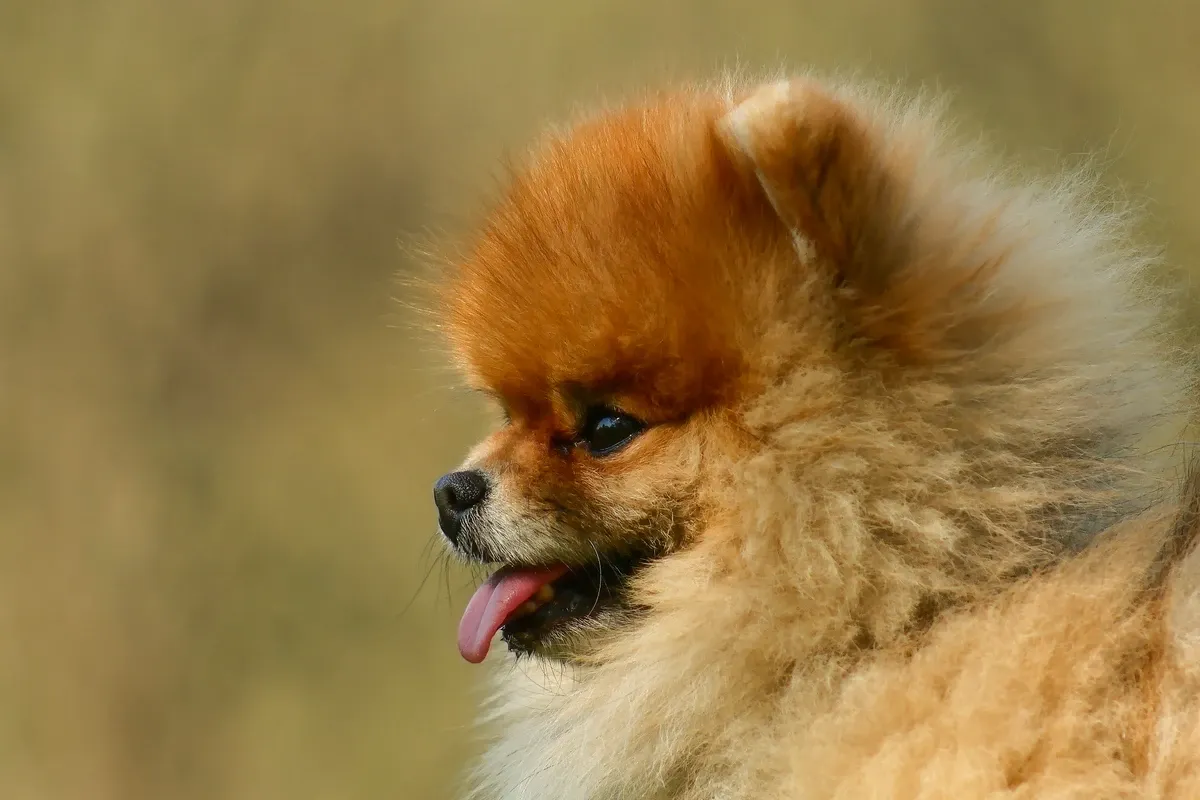
From Working Companion to Royal Jewel
The history of the Zwergspitz (Miniature German Spitz), universally adored today as the Pomeranian, is an extraordinary and fascinating evolutionary odyssey—a quintessential “case study” in how human intervention, driven by passion and the currents of fashion, can radically refine a canine breed. To fully appreciate the essence of this small, lion-hearted dog—its audacity, its vivacious intelligence, and even its modern-day delicacies—one must embark upon a journey back through time. It is a voyage that begins not in Victorian salons, but in the peat bogs of the Stone Age, and which, legend has it, even found a place at the feet of Michelangelo as he laboured over the Sistine Chapel.
Ancestral Roots: A Millennial Legacy in Art and Prehistory
The genealogy of the Pomeranian is deeply rooted in prehistory. Like all European Spitz breeds, it descends directly from the “Peat Dog” (Canis familiaris palustris Rütimeyer), a canid that lived alongside humans in the stilt-house civilisations of the Stone Age. This ancestral connection establishes the German Spitz as the oldest and purest canine breed in Central Europe, a direct heir to the first dogs to accompany humanity across the continent.
From this primordial stock evolved the robust Spitz-type dogs that, thanks to their intelligence and dense double coat, adapted perfectly to the harsh climates of Northern Europe. Their presence is documented not only through archaeological remains but also through surprising artistic anecdotes. Legend maintains that even Michelangelo Buonarroti was accompanied by a Spitz-type dog that sat faithfully upon a satin cushion during the arduous painting sessions that brought the Sistine Chapel to life. While impossible to verify with absolute certainty, this enchanting tale places the ancestors of our “Pom” not merely as working dogs, but as silent witnesses to immortal masterpieces.
The Land of the Great White Spitz: Pomerania
The direct progenitor of the dog we recognise today developed in a specific region that would eventually lend it its name: Pomerania, an area bordering the Baltic Sea, now divided between Germany and Poland. Here, for centuries, the Spitz served as a working dog of considerably larger stature, often weighing upwards of 15-20 kg. These dogs, frequently found in white, black, or cream, were known as “Wolfspitz” and were integral to daily life, prized for their versatility and incorruptible character.
They were tireless guardians of farms and livestock, their powerful bark serving as a natural alarm system, and faithful companions to the fishermen and merchants who lived on barges along the rivers. Their robustness and intelligence made them indispensable to the rural and maritime life of the region.
The Epochal Shift: Queen Victoria’s Revolution
The transformation from a hardy working dog to a refined salon jewel began when these dogs captured the attention of the European aristocracy, long before the Victorian era. Their intelligence and captivating appearance made them coveted companions for pre-eminent historical figures. It is said that Martin Luther possessed a beloved Spitz named Belferlein, whom he mentioned often in his correspondence. Even Wolfgang Amadeus Mozart dedicated an aria to his Spitz, Pimperl, and records suggest that Marie Antoinette kept several at the French court.
While these anecdotes prove the Spitz’s long-standing charm, the true, radical revolution was sparked by Queen Victoria in the 19th century. A passionate cynologist and a figure of immense cultural influence, the Queen fell deeply in love with the breed. The pivotal moment occurred during her journey to Florence, Italy, in 1888, from which she returned with a specimen that would alter history: a small, sable-coloured dog named “Windsor’s Marco”, weighing just 5.4 kg.
Queen Victoria’s return to England with Marco was a significant media event. When the dog was exhibited at the prestigious Crufts dog show in 1891, both the public and breeders were enthralled. The monarch’s declared preference for such small specimens ignited a fervent fashion and a frantic race toward miniaturisation. Everyone desired a Pomeranian “like the Queen’s”. Under her direct influence, selection became obsessively focused on size reduction. The impact was so radical and swift that, during her lifetime, the average size of the breed was reduced by approximately 50%. This intense, targeted selection is the key to understanding not only the modern morphology of the Pomeranian but also its specific health predispositions.
The Rise of a Global Icon: From the Titanic to the Einstein of Canines
With a now “toy” stature and a consolidated image as a luxury companion, the Pomeranian’s popularity exploded globally, marked by dates and anecdotes that cemented its status as an icon.
- 1891: Following the enthusiasm generated by Queen Victoria, the first breed-specific club, “The Pomeranian Club”, was founded in England. It drafted the first official standard, codifying the new “small” type as the ideal.
- 1900: The American Kennel Club (AKC) officially recognises the breed, opening the doors to overwhelming success in the United States.
- 1912: The Pomeranian’s fame was such that it secured a place even in the records of the 20th century’s most tragic maritime event. Two specimens were among the only three dogs to survive the sinking of the RMS Titanic. They belonged to first-class passengers Margaret Bechstein Hays (with her dog “Lady”) and Elizabeth Rothschild.
- 1988: After decades of acclaim, a Pomeranian named Ch. Great Elms Prince Charming II won the prestigious “Best in Show” title at the Westminster Kennel Club Dog Show, definitively enshrining its status as a star of the canine world.
In conclusion, the history of the Zwergspitz is an exceptional example of the profound impact of human selection. In little more than a century, a functional working dog was meticulously transformed into a mesmerising aesthetic icon. This process defined both its unmistakable beauty and its modern-day delicacies, leaving it with the brave soul and brilliant mind of its ancestors. It is no coincidence that in Professor Stanley Coren’s study, The Intelligence of Dogs, the Pomeranian ranks 23rd out of 138 breeds, placing it within the “Excellent Working Intelligence” category—proof that beneath that cloud of fur lies one of the sharpest and most receptive minds in the canine kingdom.
Discover the soul of this breed
Having explored its storied heritage, delve deeper into the unique temperament of the Zwergspitz or return to the main guide summary.