
The Pomeranian Worldwide:
Shows and Sports
Beyond the drawing room: discover how the Zwergspitz excels within the prestigious show rings and proves its mettle as a versatile miniature athlete in various canine disciplines.
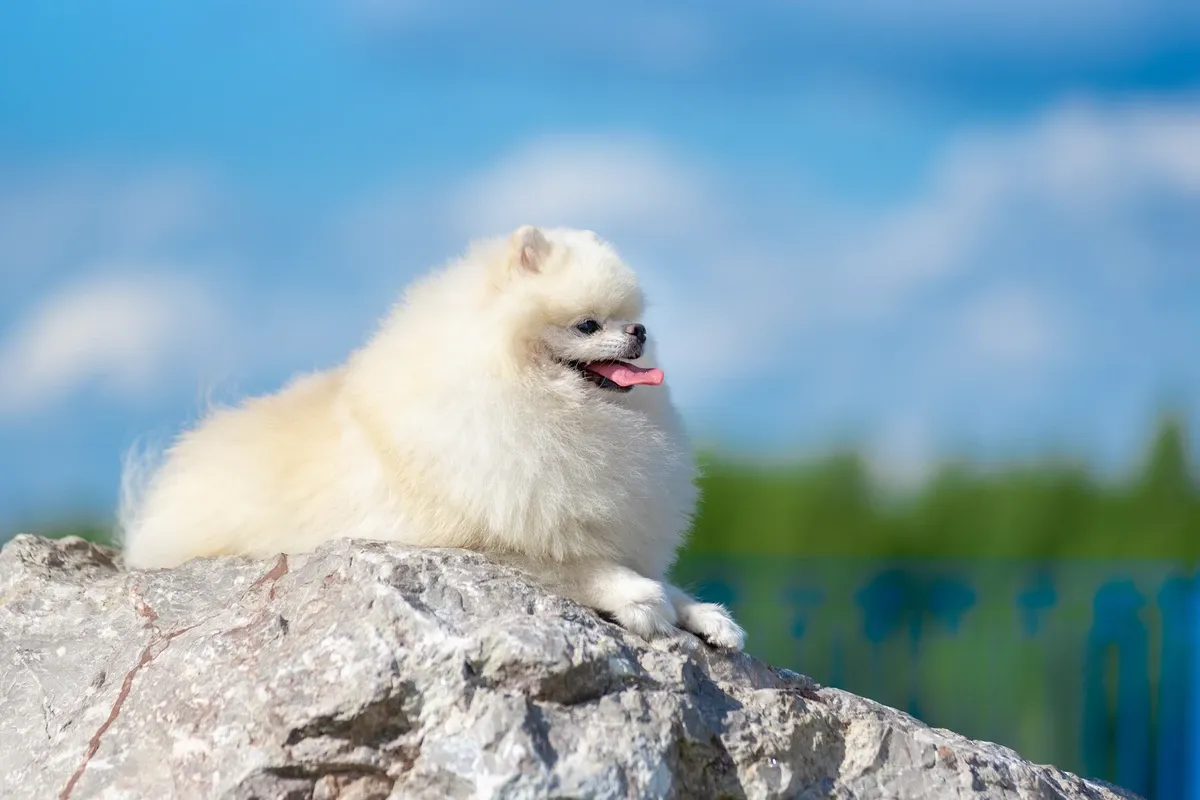
A History of Champions
Beyond being a wonderful, devoted family companion, the German Toy Spitz (Pomeranian) possesses the unmistakable soul of a star. It is a true showstopper that commands attention in conformation rings and surprises onlookers with its gritty, unexpected athleticism in canine sports. Understanding this side of the breed’s personality is essential for anyone who loves Pomeranians: these activities are far more than casual pastimes or glamorous showcases. They celebrate authentic Spitz type, serve as a vital safeguard for breed health, and offer an extraordinary outlet for the sharp intelligence of a dog that thrives on working alongside its human partner.
From historic British and European showgrounds to record-breaking American arenas and modern Italian training fields, this is the story of how a tiny cloud of fur conquered the world, one milestone at a time.
The Star Stage: The Pomeranian in the World of Dog Shows
Conformation dog shows are official zootechnical events in which specialist judges evaluate how closely each dog reflects the ideal blueprint set out in the breed standard. For a Pomeranian—with its proud carriage, springy stride, and extroverted temperament—the show ring is a natural stage where its heritage and vitality come alive.
Beyond Vanity: Why Do Dog Shows Exist?
To a casual spectator, a dog show can look like a simple beauty pageant. In reality, its primary purpose is not collecting ribbons, but safeguarding and improving the breed. An expert judge rewards dogs that best embody the breed type, sound anatomy, effortless movement, and balanced temperament prescribed by the standard, certifying their quality as prospective breeding stock. Taking part—or following the show world as an informed enthusiast—means supporting ethical, responsible breeding that protects canine functionality and pushes back against passing fads or unhealthy hyper-types.
How Dog Shows Work in Italy and Europe (ENCI & FCI)
If you attend a dog show in Italy or elsewhere in continental Europe, you are stepping into the official circuit governed by ENCI (Ente Nazionale della Cinofilia Italiana) and the FCI (Fédération Cynologique Internationale), supported in Italy by the Club Italiano Spitz (CIS), the specialist breed club dedicated to protecting the breed.
For an enthusiast exploring this world for the first time, a few key principles make everything easy to follow:
- Group Placement and Single Colour Class: At ENCI/FCI shows, the Pomeranian competes in Group 5 (Spitz and primitive types). Unlike its larger cousins, the Miniature Spitz and Medium Spitz, the Pomeranian competes in a single breed class regardless of coat colour—meaning orange, black, white, cream, brown, parti-coloured, and grey-shaded dogs are all judged together.
- How Progression in the Ring Works: Dogs are divided by sex and age class (Minor Puppy, Junior, Intermediate, Open, Champion, and Veteran). The top male and top female compete for Best of Breed (BOB), which qualifies the winner for the afternoon Main Ring to face all other Group 5 winners and, ultimately, compete for Best in Show (BIS).
- Champion Titles: Because the German Spitz is a companion and watch breed without a working trial, the title of Italian Beauty Champion is earned by demonstrating consistent morphological quality under multiple judges across National Shows, International Shows (where the CACIB is awarded), and Club Italiano Spitz Specialties. On the international stage, the premier European showcases are the European Dog Show, the FCI World Dog Show—where the Pomeranian consistently ranks among the highest-entered breeds in Europe—and Britain’s historic Crufts, where back in 1891 Queen Victoria’s famous Pomeranian, Windsor’s Marco, captivated the public and breeders alike, launching the modern era of the breed.
The Art of Grooming and Presentation: Europe vs. the United States
Preparing a show Pomeranian combines meticulous coat care with patient, positive training. Ring handling teaches the dog to move alongside its handler in a light, fluid, floating trot (gait) and to hold a proud, natural stance (stacking) during the judge’s hands-on examination—a journey built through months of play that forges deep trust between dog and owner.
An interesting detail for enthusiasts is the difference in grooming style on either side of the Atlantic:
- In American (AKC) rings, it is customary to “sculpt” the coat with scissors to accentuate a rounded, ball-like silhouette.
- In European (FCI / ENCI) rings, by contrast, the official standard explicitly states that the coat must not look modelled: groomers perform only discreet, natural tidying (around the feet, ears, and overall outline), allowing the natural volume of the undercoat and the crisp texture of the guard hair to speak for themselves.
A Legacy of Success in the American Show Ring
Alongside the European tradition, the history of the Pomeranian in United States show rings offers a remarkable chronicle of the popularity and prestige the breed achieved following the Victorian era. Historical records from the American Pomeranian Club (APC) trace this extraordinary rise:
- 1900: A landmark year. The breed is officially recognised by the American Kennel Club (AKC), and the American Pomeranian Club (APC) is founded. That same year, the very first “Best of Breed” award goes to Nubian Rebel, a brown-coated Pomeranian.
- 1909–1910: The APC becomes the official AKC “Parent Club” for the breed and, in 1910, hosts its inaugural “specialty show” drawing an impressive 138 entries—a remarkable turnout for the era. The winner was CH Canner Prince Charming, a black dog.
- 1926: A Pomeranian makes history at Westminster, America’s most prestigious dog show, as Glen Rose Flashaway becomes the first representative of the breed to win the Toy Group (Group I).
- The 1970s and 1980s – A Celebration of Colours: These decades highlight Pomeranians of diverse coat colours, showcasing the breed’s genetic richness. In 1973, CH Silva Lade’s Gentle Ben becomes the first black Pomeranian to win an all-breed Best in Show. Breakthrough wins soon follow for rarer colours on the American circuit: the blue CH Silva Lade’s The Enforcer in 1981 and the chocolate & tan CH Silva Lade’s Almond Joy in 1985.
- 1988 – Ultimate Crowning Glory: A defining moment in breed history. CH Great Elms Prince Charming II, a magnificent orange-sable dog, captures the sport’s most coveted prize: Best in Show at the Westminster Kennel Club Dog Show. Broadcast on national television, the victory catapults the Pomeranian into the pantheon of canine icons worldwide.
- From 2010 Onward: With the introduction of the “Grand Champion” (GCH) title, Pomeranians continue setting milestones. The first to earn the title was GCH CH Castile’s Endless Love in May 2010, followed shortly thereafter by the first Blue Merle & Tan Grand Champion, GCh Ch Blue Moon’s Dear Prudence RN.
Note for Italian and European Enthusiasts: American Kennel Club (AKC) rules register and allow certain coat colours that are not recognised in Europe. Under FCI / ENCI Standard No. 97 enforced in Italy and across FCI member countries, Blue and Merle coats are excluded from the standard and result in disqualification in European show rings on genetic and health-protection grounds.
The Miniature Athlete: The Pomeranian as a Sports Champion
Defying every stereotype of a fragile “lapdog”, the Pomeranian conceals the heart of a determined athlete and a razor-sharp mind eager for a job to do. Unsurprisingly, studies on canine intelligence rank the breed 23rd out of 138 breeds—quick-witted, responsive, and deeply attuned to its handler.
Which Canine Sports Can You Practise Today in Italy and Europe?
You do not need to aim for world championships to give your Pomeranian the joy of canine sports: even at a recreational level, training at a local club boosts your dog’s confidence, deepens your bond, and prevents boredom. Below are the disciplines best suited to its physical build and mental agility, governed in Italy by ENCI and national sporting federations:
| Discipline | How It Works | Why It Suits the Pomeranian |
|---|---|---|
| Agility Dog (Small Category) | A timed obstacle course (jumps, tunnels, seesaw, weave poles) navigated at speed under the handler’s guidance. | Under official FCI / ENCI regulations, the Pomeranian (18–24 cm) competes in the Small Category (for dogs under 35 cm at the withers, with jump heights lowered to 25–30 cm). Several European countries also offer dedicated Extra Small divisions tailored specifically to toy breeds. |
| Rally-Obedience & Obedience | Precision obedience routines built on crisp cues, focus, and silent teamwork between dog and handler. | Showcases the Spitz’s remarkable working intelligence without placing repetitive jumping impact on delicate joints, making it ideal at every age. |
| Hoopers | A flowing, jump-free variation of Agility in which the dog navigates ground-level hoops, tunnels, and barrels directed from a distance. | Rapidly growing across Europe, it is a zero-impact sport that lets small dogs run freely and safely. |
| Dog Dance (Freestyle / Heelwork) | Choreographed routines set to music blending heelwork transitions and creative tricks. | Capitalises on the Pomeranian’s theatrical carriage, fast learning speed, and love of continuous interaction. |
| CAE-1 & Pet Therapy (AAI) | ENCI’s official CAE-1 test certifies urban reliability and balanced temperament; Animal-Assisted Interventions (AAI) involve dogs in educational and therapeutic programmes. | Thanks to its emotional sensitivity and approachable size, a well-socialised Pomeranian makes an extraordinary therapy and community partner. |
Great American Pioneers: Record-Breakers Who Made History
The international track record of the breed in competitive sports—documented in remarkable detail in the United States—stands as lasting proof of its versatility, grit, and eagerness to partner with humans:
- Obedience and Tracking Pioneers (1940s): As early as the 1940s, Pomeranians were proving their mental acuity. In 1940, CH Bantam Bacheler CD became the first of the breed to earn an Obedience title (CD – Companion Dog). Yet the standout star of the decade was Georgian’s Betty, UDT: not only did she earn her advanced CDX title in 1941, she also became the breed’s first Utility Dog Tracker (UDT) in 1943 and its first Tracking Dog (TD) titleholder in 1948, demonstrating extraordinary focus and scenting determination.
- The Agility and Flyball Boom (1990s and 2000s): With the rise of fast-paced spectator sports, Pomeranians found thrilling new arenas in which to shine:
- Agility: In 1995, Kassel’s Dandelion Down, UD NA became the first Pom to earn a Novice Agility (NA) title, paving the way for countless successors. In the modern era, champions such as AGCH MACH12 PACH4 Belle Ami—who in 2020 became the breed’s first Agility Grand Champion (AGCH)—have set a benchmark of supreme athletic excellence.
- Flyball: In 2003, MACH3 Lord Peter of Bristol Court “Keoki” shattered expectations by becoming not only the first Pomeranian Flyball champion, but the first dog of any Toy breed to achieve the honour. The following year, in 2004, “Keoki” went on to become the first and only Pomeranian to hold dual championships in both Flyball and Agility.
- Champions in Rally, Scent Work, and Emerging Disciplines: The Pomeranian’s versatility has never stopped expanding:
- Rally: Since the sport’s official launch in 2005, Poms have earned titles at every tier. In 2021, RACH Starkota N Toyyoyo’s Highland Princess became the first to capture the prestigious Rally Champion (RACH) title.
- Scent Work: In this nose-driven discipline, MACH Horizons Do I Dazzle You Of Twilight, affectionately known as “Bella”, made history between 2017 and 2019 by completing every level (Novice, Advanced, Excellent, and Master) to become the first Toy breed dog in the United States to earn the Scent Work Master title.
- Beyond Every Limit: A long string of breed “firsts” underscores its adaptability: the first Coursing Ability title in 2012, the first official Therapy Dog title in 2013, and the first Canine Good Citizen (CGC) award earned as early as 1988 by CH Idlewyld Lavalier, CDX CGC.
The True Trophy: Everyday Connection
Whether stepping onto the green carpet of an international conformation ring or having fun together on a Rally-Obedience or Hoopers course close to home, this gallery of champions tells a simple, rewarding truth: the Pomeranian is far more than a pretty face. It is a bright, courageous life partner eager to share adventures with you—capable of excelling in any arena whenever it is given the chance to express its big heart and lively mind.
The Potential of a Champion
You have explored the sporting and exhibition potential of the Pomeranian. Contrast its exquisite characteristics with other breeds, or return to the main guide summary.