
Guide to the Pomeranian
(Zwergspitz)
A comprehensive compendium to understanding, admiring, and nurturing this small giant of the canine world. The definitive resource for owners and devoted enthusiasts.
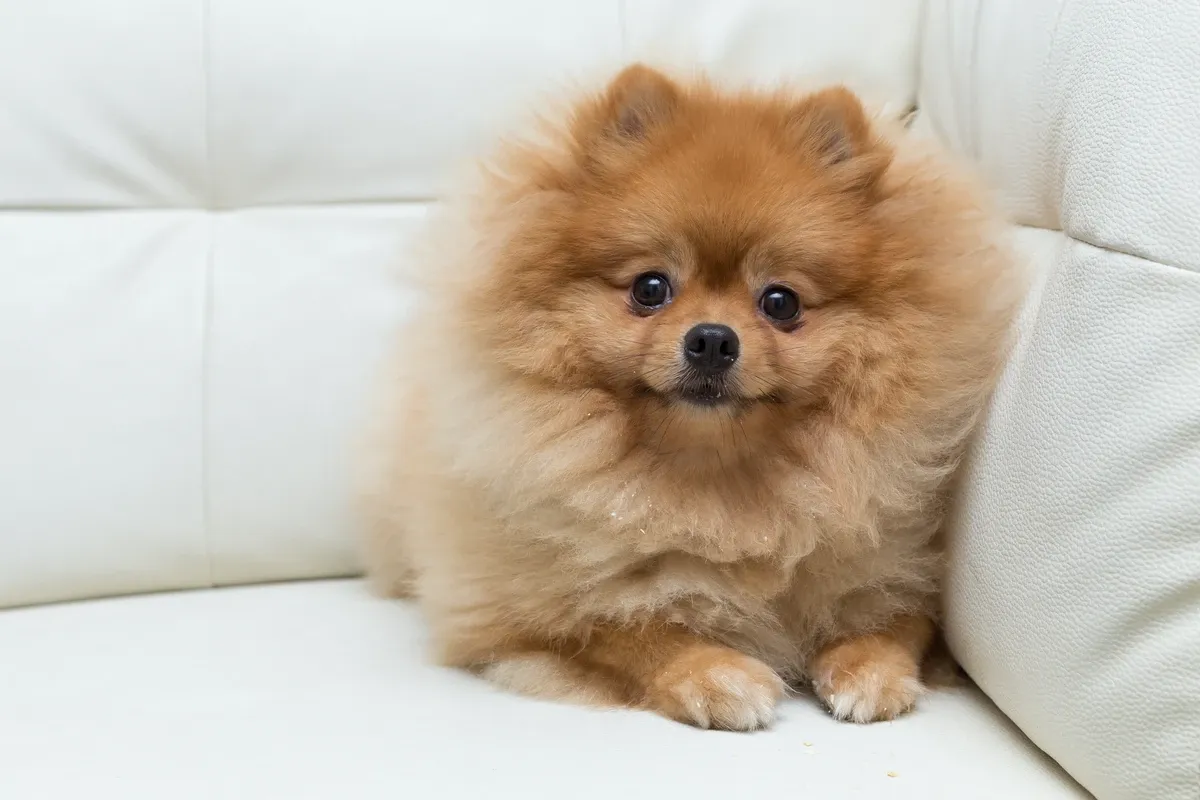
Our Passion
A Guide Born of Experience
Certified Expertise
This guide is the quintessential result of our journey as ENCI-certified ethical boutique breeders and trainers, created to share profound and reliable knowledge of the breed.
Verified Information
Each section is meticulously based on the official standard, scientific data, and our daily practice, offering you an exhaustive and truthful resource.
Holistic Wellbeing Approach
We believe in a philosophy that considers every facet of the dog: not merely physical health, but their emotional, mental, and social requirements.
Community Support
Our objective is to cultivate a community of discerning and conscious owners, promoting a canine culture rooted in profound respect.
We are proud members of the Club Italiano Spitz, the Specialized Society recognized by the ENCI (Ente Nazionale Cinofilia Italiana) entrusted with protecting and promoting the morphological and temperamental standards of the Spitz breeds.
Guide Summary
Explore the Core Chapters
Select a topic to explore our dedicated in-depth analysis.
The European Jewel
The Zwergspitz, universally celebrated by its more evocative and alluring title, the Pomeranian, is not merely one of the world’s most iconic canine breeds; it is a living masterpiece of history, selective breeding, and character. Encased within a petite and compact frame beats the undaunted heart of a lion, an exuberant personality, and a sharp intelligence that consistently defy its diminutive stature. This “cloud of fur,” forged in the frost-bitten lands of the North and refined within the drawing rooms of European royal courts, represents a concentrated essence of loyalty, beauty, and heritage—a direct descendant of the most ancient European canines, the Stone Age Peat Dogs.
This guide serves as the most comprehensive and authoritative resource for those who wish not only to know but to profoundly understand this magnificent breed. We shall explore every facet: from the technical rigour of the FCI breed standard, which defines its morphological perfection, to the latest veterinary insights to ensure its well-being, alongside practical advice born from the direct experience of ethical boutique breeders and devotees. Our objective is to offer you a reliable compendium for a joyous and conscious life together, celebrating a dog that is far more than a mere companion, but a true member of the family.
The Importance of a Conscious Choice: To Know is to Love
Choosing to share one’s life with a Pomeranian means welcoming a dynamic, discerning, and incredibly engaged life partner, not a simple luxury accessory. It is of paramount importance to understand that behind the irresistible “pom-pom” appearance lies the fearless soul and the requirements of a “large dog.” This small volcano of energy requires early and consistent socialisation, coherent education, and daily mental stimulation to remain balanced and content. To own a Pomeranian is to accept the responsibility of protecting its delicate physical structure while simultaneously satisfying its brilliant mind and audacious spirit.
Its dual nomenclature provides a window into its fascinating evolution:
- “Zwergspitz”: This is its correct and official zootechnical designation according to the FCI (Fédération Cynologique Internationale) classification. This name proudly places it within Group 5, the category for Spitz and primitive types, underscoring its ancient and noble origins.
- “Pomeranian”: The name by which it has captured the hearts of the world. A tribute to the Pomerania region, nestled along the Baltic Sea between Germany and Poland, from which its larger ancestors descend. Its global renown was later sealed by Queen Victoria of England, who fell enamoured with the breed and championed its refinement toward the “toy” size we cherish today.
Its silhouette is unmistakable: a magnificent double coat with a dense undercoat, a profuse mane, a plumed tail curled over the back, and a fox-like head with a bold, inquisitive expression.
The German Spitz in Context: Varieties and Group 5
To truly comprehend the Pomeranian, it is essential to place it within its ancestral family: the German Spitz. These are not different breeds, but five varieties of the same breed (FCI Standard No. 97), distinguished solely by size and, in certain instances, specific colourings. The Pomeranian is quite simply the smallest of these gems. The following table, strictly based on the ENCI/FCI nomenclature and measurements, clarifies the distinctions.
| Official ENCI/FCI Variety | Height at Withers (cm) | Distinguishing Features |
|---|---|---|
| Wolfspitz / Keeshond | 49 cm ± 6 cm | The tallest, permitted only in wolf-grey (grey-shaded). Historical companion of Dutch barges. |
| Giant Spitz | 46 cm ± 4 cm | Imposing and rarer, permitted in white, black, and brown. An ancient farmstead guardian. |
| Medium Spitz | 34 cm ± 4 cm | A versatile size, permitted in various colours. Robust, attentive, and an excellent family dog. |
| Small Spitz | 26 cm ± 3 cm | Very similar to the Zwergspitz but visibly larger and sturdier. An agile and alert companion. |
| Zwergspitz / Pomeranian | 21 cm ± 3 cm | The smallest and most globally popular. A concentration of great personality in a compact frame. |
This classification aids in understanding that your Pomeranian shares the same DNA, the same vigilant character, and the same fundamental structure as its “larger siblings,” concentrated into a reduced format.
The Significance of ENCI/FCI Group 5
Membership in Group 5 – Spitz and Primitive types is no coincidence. This group acts as a “living museum” of canine history, gathering breeds that, in both morphology and temperament, have remained closest to their ancestral forebears—the wolf and the first domestic dogs. These are dogs that have undergone less genetic manipulation by man compared to, for instance, herding or pointing dogs.
Group 5 is subdivided into sections: Nordic sledge dogs (Siberian Husky), Nordic hunting dogs (Akita), Nordic guard and herding dogs (Samoyed), and, indeed, the European Spitz. Being part of this group signifies shared traits such as erect triangular ears, a high-set curled tail, a wedge-shaped muzzle, and a keen instinct for vigilance—all functional adaptations developed to survive harsh climates and perform specific duties. Your Pomeranian, therefore, is not merely a companion dog, but the heir to a millennial history of resilience and genetic purity.
Your journey with the Pomeranian begins here.
We trust this guide proves invaluable. Should you have any questions or wish to meet our puppies, please do not hesitate to contact our Estate.