
The Pomeranian Breed Standard
A detailed analysis of the official FCI Document No. 97, defining the architecture, proportions, and essence of the Zwergspitz.
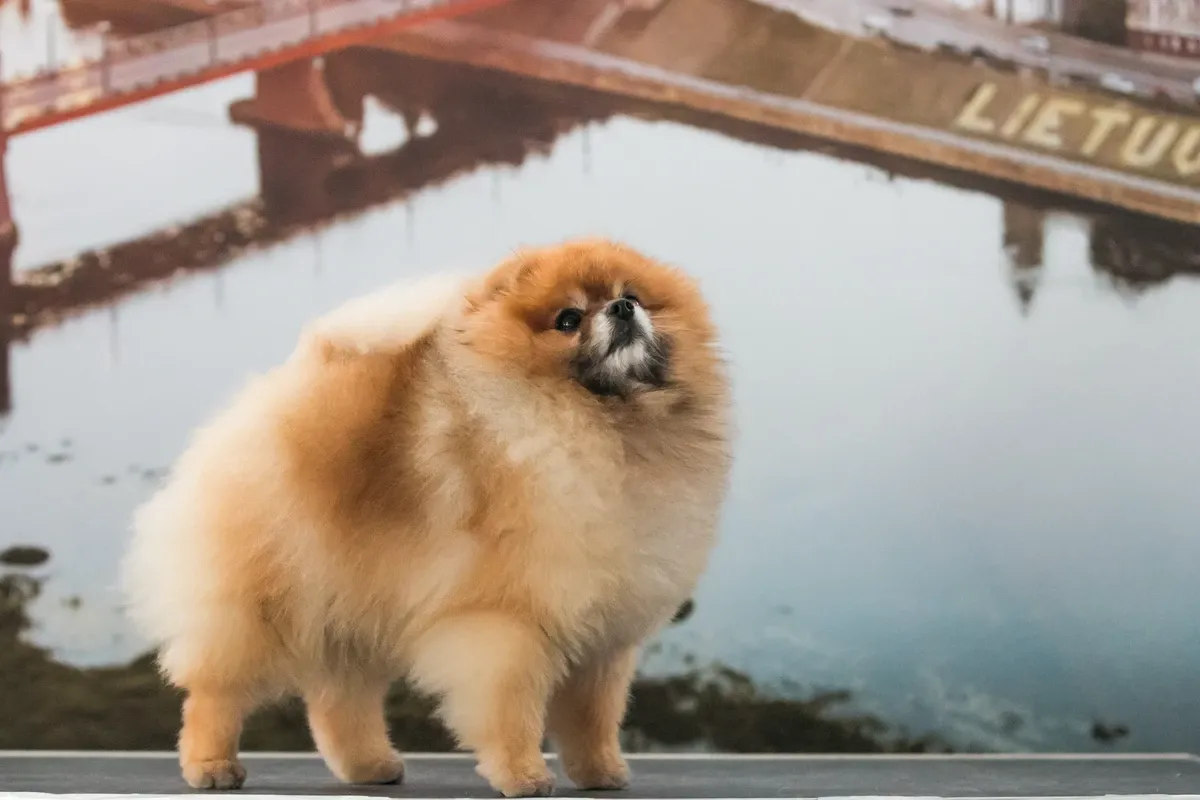
The Definitive Identity of Your Pomeranian
Before embarking upon a detailed analysis of the perfect Pomeranian, it is vital to understand the significance of the “Breed Standard”. Consider the Standard as the official and universally recognised identity card of a canine breed. It is far more than a mere wish list; it is a precise technical document—an “Artistic Compendium”—that describes in exquisite detail the ideal specimen, encompassing both physical appearance (morphology) and character (temperament).
This document is the most critical tool for breeders, show judges, and true connoisseurs. It serves as the compass guiding our selection, with the steadfast goal of preserving the breed’s unique characteristics, safeguarding its health, and ensuring its functionality, all while protecting it from extreme and harmful trends.
The Custodians of the Standard: From Germany to the World
Globally, the ultimate authority for canine affairs is the FCI (Fédération Cynologique Internationale). This world federation comprises national canine associations from nearly 100 countries. The FCI acts as the guardian of the standards for breeds originating from its member nations. As the German Spitz (of which the Pomeranian is the miniature variety) is a breed of German origin, Germany holds the “intellectual stewardship” of the official standard, which is then approved and published by the FCI for international dissemination.
In Italy, the sole body recognised by the FCI is the ENCI (Ente Nazionale della Cinofilia Italiana). The ENCI’s role is pivotal: it officially adopts the standards issued by the FCI, manages their translation, and establishes them as the binding regulations for all official canine activities within the territory. This means that whether you are presenting a Pomeranian at an exhibition in Italy or applying for a pedigree, the metric for judgement and conformity will always be the prevailing FCI Standard, enforced by the ENCI.
For the purposes of this guide, our absolute reference—our “North Star”—shall be FCI Standard No. 97, in its current version in force.
An Insight into Bloodlines: Styles, Types, and Myths
As you explore the world of the Pomeranian, you will frequently encounter the term “bloodlines”. It is a fascinating yet complex subject, where facts often blur with marketing and personal perception. Regarding the Pomeranian, it is more accurate to speak of “Types” or “Styles” that have flourished in different geographical regions.
- The English Type (UK Type): Regarded as the “classical” line, it places great emphasis on elegance, structural correctness, and fluid movement, featuring a more refined, fox-like expression.
- The American Type (USA/AKC Type): This type tends to possess a more substantial bone structure, an even more compact and “cobby” body, and an extremely profuse coat. It is from this line that the immense popularity of the “Teddy Bear” look originates.
- The Asian Type (often termed “Thai”): A more recent breeding trend that pushes “doll-like” features to the extreme: exceptionally short muzzles, very large eyes, and an incredibly dense coat, creating a “perpetual puppy” aesthetic.
Our Counsel: Exercise caution with purely commercial terms such as “Russian line” or “Teacup Pomeranian”. A reputable breeder will always refer to the official standard of their operating country (for us, ENCI/FCI), and will invariably place health above all else.
A Detailed Analysis of FCI Standard No. 97
We shall now decode the current standard for you, point by point. We aim to help you understand not only what the standard dictates, but why.
General Appearance and Key Proportions
The standard describes the Spitz as “captivating”. Its general harmony is defined by a magnificent coat, a grand mane-like collar, and a bushy tail. The key proportions are:
- Height/Length Ratio: 1:1. The characteristic square silhouette, a hallmark of compactness and type.
- Skull/Muzzle Ratio: Approximately 2:4. This ensures the typical fox-like expression without the complications associated with brachycephalic breeds.
Cranial Morphology: The Foxy Expression
The head is the dog’s calling card: wedge-shaped, with a moderate stop, a full set of 42 teeth with a scissor bite, dark almond-shaped eyes, and small, triangular, perfectly erect ears.
Structure, Body, and Tail: Strength Beneath the Coat
Beneath the profusion of fur, the Pomeranian is a small athlete. The back must be short and firm, the chest deep, and the tail, set high, must rest securely over the back, contributing to the iconic rounded silhouette.
The Double Coat: A Masterpiece of Natural Engineering
The Pomeranian’s coat is its most celebrated feature, yet often the least understood. To define it simply as “long hair” is an injustice; it is a highly specialised Double Coat, an evolutionary masterpiece inherited from its Nordic ancestors. Understanding its structure is fundamental to its health.
The coat consists of two distinct layers with differing functions:
- The Undercoat: The layer closest to the skin. It is composed of short, dense, soft, and woolly hairs. Its primary function is thermal insulation. Dense and compact, it creates an air pocket that traps body heat, protecting the dog from intense cold, much like a high-quality down jacket. This layer provides the coat with its incredible volume and “cloud-like” appearance.
- The Guard Coat (Top Coat): The visible outer layer. It consists of longer, straight, harsh hairs with a certain vitreous texture. These “guard hairs” are not soft, but serve an essential protective role:
- Waterproofing: They shield the undercoat and skin from rain, snow, and moisture.
- Debris Protection: Their structure naturally repels mud and dust.
- UV Protection: They screen the dog’s delicate skin from solar rays, preventing sunburn.
Evolutionary Advantages: All-Season Protection
It is a common misconception that such a thick coat is a burden during summer. In truth, the Pomeranian’s double coat functions like a thermos, not a fur coat.
- In Winter: The air pocket created by the undercoat insulates against the cold.
- In Summer: The guard coat reflects solar rays, while the undercoat, less dense after the spring moult, allows for air circulation that keeps the skin cooler. For this reason, clipping or shaving a Pomeranian is a grave and damaging error. Removing this natural protection system not only exposes the skin to burns and insect bites but compromises the dog’s ability to thermoregulate, paradoxically causing it to suffer more from the heat.
A Spectrum of Elegance: Pomeranian Colours
The variety of colours permitted in the Zwergspitz is among the most extensive and enchanting in the canine world. Below is a detailed list based on the standard, enriched with specific nuances.
-
Orange
- Description: The most iconic and popular hue. The tone must be uniform, bright, and intense. Puppies are often born a lighter shade (cream or sable) and darken as they mature.
- Note: This colour’s prestige is largely owed to Queen Victoria and her famous dog, “Windsor’s Marco”.
-
Orange Sable
- Description: An orange base where the guard hairs have black tips. This creates a “shaded” or “sooty” effect, particularly evident along the back and tail.
-
White
- Description: A pure, brilliant white, free from any yellowish tinge, especially on the ears. Pigmentation of the nose, lips, and eye rims must be a deep black to provide a sharp contrast.
-
Black and Tan
- Description: An intense coal-black base with well-defined tan (reddish-brown) markings in specific locations: above the eyes, on the muzzle, throat, chest, legs, and beneath the tail.
-
Cream
- Description: A delicate ivory or beige tone, significantly lighter than orange. Puppies may be born white and develop this hue over time.
-
Cream Sable
- Description: Similar to Orange Sable, but with a cream base. The black-tipped guard hairs offer a refined and subtle contrast.
-
Wolf Sable (Keeshond Grey)
- Description: The signature colour of the larger Keeshond. A silver-grey with black-tipped guard hairs. Characterised by specific facial “spectacle” markings.
-
Brown / Chocolate
- Description: A rich, uniform dark brown. In this variety, the pigmentation of the nose and eye rims is dark brown (liver) rather than black.
-
Black
- Description: A deep, lustrous coal-black, free from any reddish or greyish cast. Both the undercoat and skin should be dark.
-
Particolour
- Description: The base colour must be white. Patches (black, brown, orange, etc.) must be well-distributed across the body. A white blaze on the head is highly prized.
-
Sable
- Description: A general term referring to any base colour (red, cream, orange) with the characteristic black-tipped shading.
-
Blue
- Description: A dilution of black, appearing as a dark steel-grey. A rare and sophisticated colour.
-
Merle
- Crucial Note: While it exists, the Merle colour is not currently recognised by the FCI/ENCI standard for the German Spitz, due to its association with potential health issues (auditory and ocular) if not bred with extreme competence.
Gait and Movement
Movement must be fluid, elastic, and driven by strong hindquarters. A light, effortless trot is the ultimate proof of a sound and healthy structure.
Size, Weight, and the Hierarchy of Faults
- Height at Withers: The official size is 21 cm, with a tolerance of 3 cm (the correct range is therefore 18 cm to 24 cm).
- Disqualifying Faults: Serious issues that exclude a dog from Ethical Boutique Breeding and exhibitions include: aggressive/timid temperament, an open fontanelle, overshot or undershot bite, non-erect ears, and distinct white patches on solid-coloured dogs.
A Glimpse into the Future: The New FCI Standard (Effective 01.01.2025)
While our guide reflects the standard currently applied by the ENCI (August 2025), it is important to note that the FCI has approved a revised version of Standard No. 97, effective internationally from 1st January 2025. This version awaits formal adoption by the ENCI. Key updates include the classification of colours into 3 distinct groups, a firm stance against sizes below 18 cm (labelled as “undesirable”), and more specific fault definitions, marking a significant step forward in breed protection.
The next step in your journey
Now that you are familiar with the standard, explore the fascinating origins of the breed or return to the main summary of our guide.