
Pomeranian Temperament and Personality
Explore the soul of the Zwergspitz: a concentration of intelligence, loyalty, and audacity within a diminutive and compact frame.
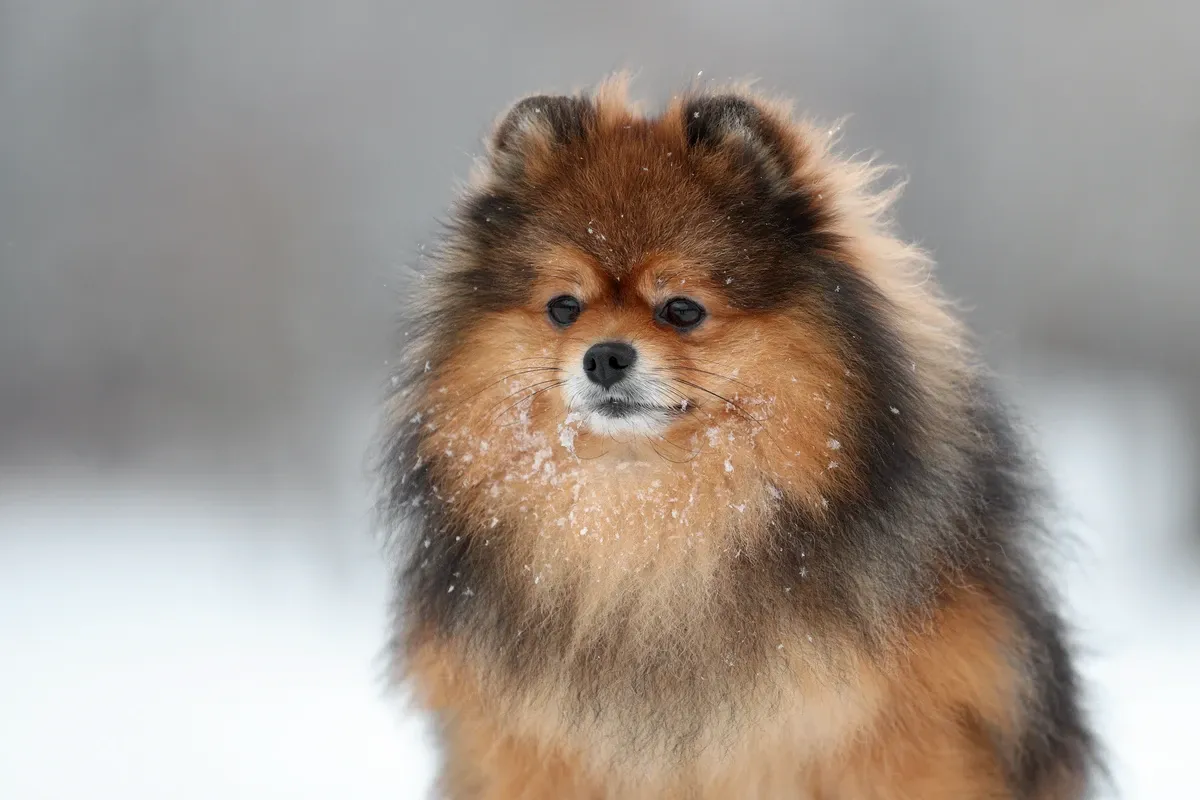
Character and Temperament of the Pomeranian: A Psychobiological Analysis of a “Grand” Spitz
The temperament of the Zwergspitz (Pomeranian) represents one of the most compelling studies of selective drift within the canine world. Although morphologically refined into a diminutive frame for aesthetic and companionship purposes, its psychological profile remains indissolubly linked to its heritage as a Nordic working dog.
To truly understand the Pomeranian is to look beyond the profusion of its undercoat and recognise the legacy of the ancient Spitz of Pomerania and Lapland: dogs that were sturdy, vigilant, and possessed of a remarkable psychological fortitude. Analysing the character of this breed requires a multidisciplinary approach, traversing ethology and applied canine psychology.
We are not merely observing a lapdog, but rather a miniature predator endowed with an exceptionally high reactivity to stimuli and a cognitive processing capacity that distinguishes it sharply from many other toy breeds.
The Cognitive Profile: Adaptive and Working Intelligence
The Pomeranian does not merely execute commands: it processes information. Its classification on the Stanley Coren scale (23rd place) denotes excellent working intelligence; however, it is in its adaptive intelligence—the capacity to solve problems autonomously—where this breed truly excels.
1. Rapid Learning and Stimulus Discrimination
The Pomeranian’s neuronal plasticity allows for an extremely rapid kinaesthetic acquisition of commands. Nevertheless, its analytical mind leads it to discriminate the validity of a command based on the context and the consistency of its human guide.
- Processing Speed: It associates vocal or gestural signals with remarkably few repetitions.
- Generalisation Capacity: It transfers learned behaviours across diverse environments, provided the reinforcement remains consistent.
2. Strategic Problem Solving
The Pomeranian frequently manifests intelligent opportunistic behaviour. When faced with an obstacle, it does not limit itself to barking or pushing; it explores alternative solutions, demonstrating a sophisticated understanding of spatial and causal relationships.
Scientific Note > This cognitive vivacity is a phylogenetic remnant of its guardian ancestors, who were selected to rapidly evaluate threats and decide whether to intervene or alert.
The Affective Dynamic: A Symbiotic and Ethological Bond
The Pomeranian is often described as a “shadow dog”. From an ethological perspective, this reflects a potent affiliative drive and a necessity for social cohesion typical of dogs selected to live in close proximity to humans.
3. Emotional Synchrony and Mirror Neurons
This breed possesses an exceptional sensitivity for decoding human non-verbal language: facial micro-expressions, posture, and prosody.
- Social Feedback: It reacts acutely to the emotional state of the owner.
- Active Presence: It positions itself strategically to monitor its primary attachment figure.
The Ontogeny of Courage: The “Big Dog Personality”
One of the most complex aspects of the breed is the discrepancy between the Pomeranian’s physical size and its self-perception.
4. Absence of Behavioural Size Inhibition
The Pomeranian manifests no inferiority complexes. On the contrary, it exhibits an inner confidence that, without adequate socialisation, can border on temerity.
- Incorruptible Vigilance: An exceptionally low reaction threshold to suspicious noises.
- Dignity and Authority: It does not tolerate disrespectful handling.
- Proud Bearing: It retains the inherent pride of the Nordic Spitz.
Vitality and Adaptability: Managing Psychosomatic Energy
The temperament of the Pomeranian is characterised by intense energy that requires mental as well as physical outlets.
5. Environmental Versatility
While considered an ideal apartment dog, reducing its life to four walls is a profound error.
- Selective Socialisation: Early socialisation prevents reactive tendencies.
- Mental Stimulation: Cognitive games and the learning of “tricks” are fundamental.
- Adaptability: It transitions seamlessly from domestic relaxation to demanding excursions.
Technical Table: Analysis of Character Traits
| Character Dimension | Level | Behavioural Analysis |
|---|---|---|
| Cognitive Intelligence | Excellent | High capacity for abstraction and rapid learning |
| Emotional Resilience | Medium-High | Rapid recovery when supported by the owner |
| Affiliative Drive | Maximum | Constant seeking of cooperation and bond |
| Vigilance Threshold | Very Low | Immediate reactivity to environmental stimuli |
| Intraspecific Dominance | High | Authoritative attitude towards larger canines |
Final Considerations
To define the Pomeranian simply as a companion dog is reductive. It is a Zwergspitz—a miniature Spitz—that preserves intact the gifts of intelligence, courage, and vigilance of its ancestors.
Its management requires calm, consistent, and intellectually stimulating leadership. To educate a Pomeranian is not to domesticate a toy, but to guide a brilliant mind and an intrepid heart.
Those who choose this breed must be prepared to coexist with a titanic personality encased in a tiny body: a companion that will never cease to surprise and challenge expectations.
From Insight to Interaction
Now that you understand their unique personality, discover the finest techniques to engage and educate their brilliant mind, or return to the main guide summary.